Stonehenge has been an enigma for centuries not only for people in Britain, where it is located, but for people all around the world. Nobody has said for certain what the purpose or function of this impressive stone monument has been throughout the various stages of its recorded history. Several of the most prominent hypotheses include: an astronomical observatory, a place of worship, a Neolithic hospital, a burial ground and a place for making offerings to gods. The last two are said to be evidenced by the remains of human bones found on the site. Different methods of dating have caused most archeologists to believe that it was built from around 3000 to around 2000 BC, but the precise course of the events is impossible to estimate because of the inadequacy of the measurement methods.
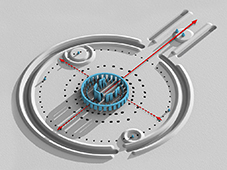
Not being a professional archeologist or an engineer, I have no intention of writing a scientific report on the matter, but as a human being who is curious to know more about the world around us, I have all the rights to ask and answer questions that will help me to do so.
I also believe that it is our right and privilege to build on the progress of others in all areas of life which is why I will be using work and contributions made available to the general public by being posted on the internet by their authors. My main focus will be a 3D computer rendering of the overall site that has been released into the public domain by Wikimedia Commons.
My reason for doing so is that the author (or authors) of what is now known as Stonehenge (I believe that the final design was produced by the creative mind of one person whom I will discuss at greater length at the end of my exposition but was completed with the joint effort of a team of people) erected the structure in this specific place on purpose. If that was not so, why didn’t they build it somewhere else? Why did they decide to build it exactly there? For many reasons, I suppose, some of which will always remain unknown to us, as well as for some that they wanted us to know, because that was the purpose of building it on this particular site: “sending” a message to the future generations which was so important to the designer and his team that they devoted a large part of their lives, and probably wealth to making it happen. By building it there in that size and form, they wanted to say that their message was more important and of much greater value than all the other messages “sent” by the previous constructors.
The fact that they used such heavy stones, some of which were transported from southwest Wales (100-150 miles or 160-240 km away), instead of using rocks from the neighboring region (Stonehenge is one of the more than 350 similar monuments built in the surrounding areas), and the huge amount of time and effort they invested in completing it, should also point to the significance of the idea they wanted to convey.
If someone had such an important message to communicate, he wouldn’t risk much in terms of complexity/simplicity of the meaning. He would try to make it as simple as possible and not too simple at the same time, because either of the two would undermine both the meaning and the effect of the meaning.